Selected learning experience 03
Grade 4 · Literacy & community
How can our stories bring us closer together?
An eleven-issue, six-month student newsroom that began with one offhand question—and grew because learners kept choosing to write, create, collaborate, and be published.
The context
The Room 207 Times operated on a two-week newsroom cycle. Students selected their jobs on Friday, spent the following week researching, and used the second week to draft, peer edit, revise, and prepare a finished piece for publication that Friday. Editing was deliberately shared: there was no single chief editor because every student was responsible for helping strengthen someone else’s work. Interviewers managed an even longer chain of authentic tasks—arranging a time with a staff member, drafting and peer-editing questions, conducting and transcribing the interview, and shaping the conversation into a cohesive story.
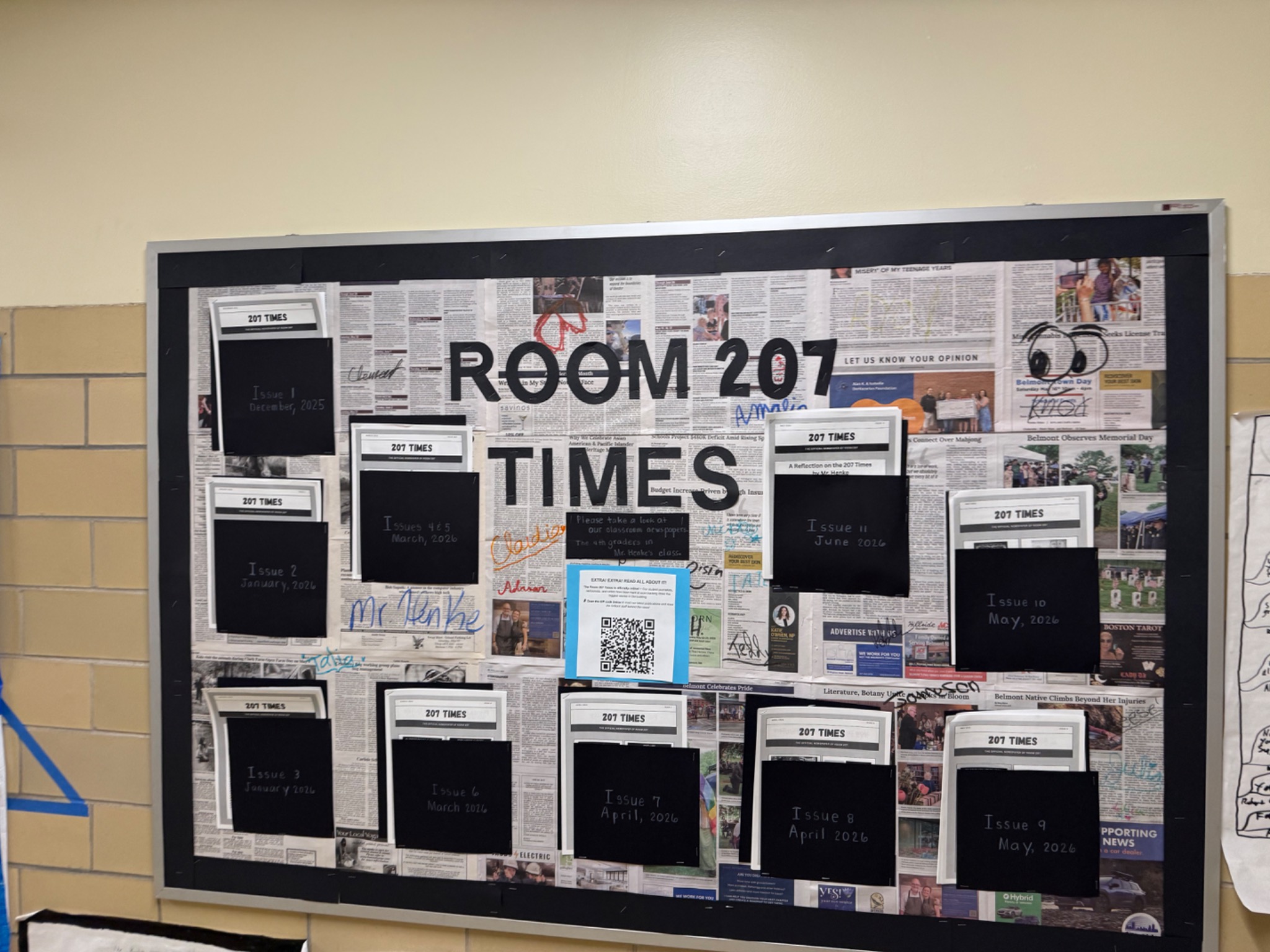
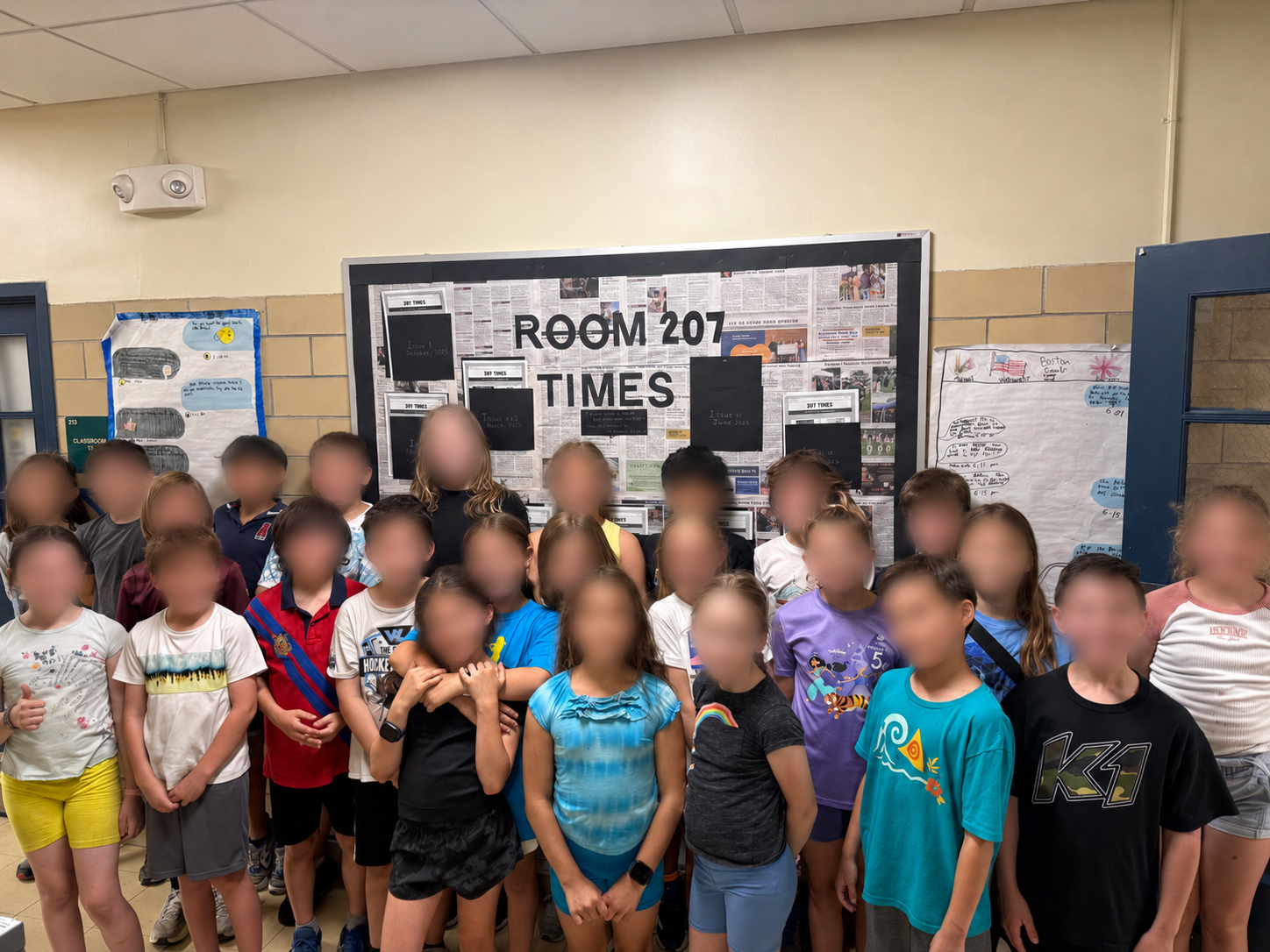
Our classroom.
Our stories.
Reporting the moments, ideas, and questions that shape our community.
Every two weeks, the NFL draft chime played, the wheel spun, and students selected their next newsroom roles.
How can our stories bring us closer together?
The learning journey
From curiosity
to meaningful action.
- 01
Analyzed professional newspapers for structure, craft, and purpose while seeking models that did not center only dark or discouraging news
- 02
Selected newsroom jobs on Friday and spent the next week researching topics, sources, and community stories
- 03
Drafted during the second week, then exchanged work so every journalist served as both writer and editor
- 04
Completed multi-step reporting—from arranging staff interviews and refining questions to transcribing conversations and shaping cohesive stories
- 05
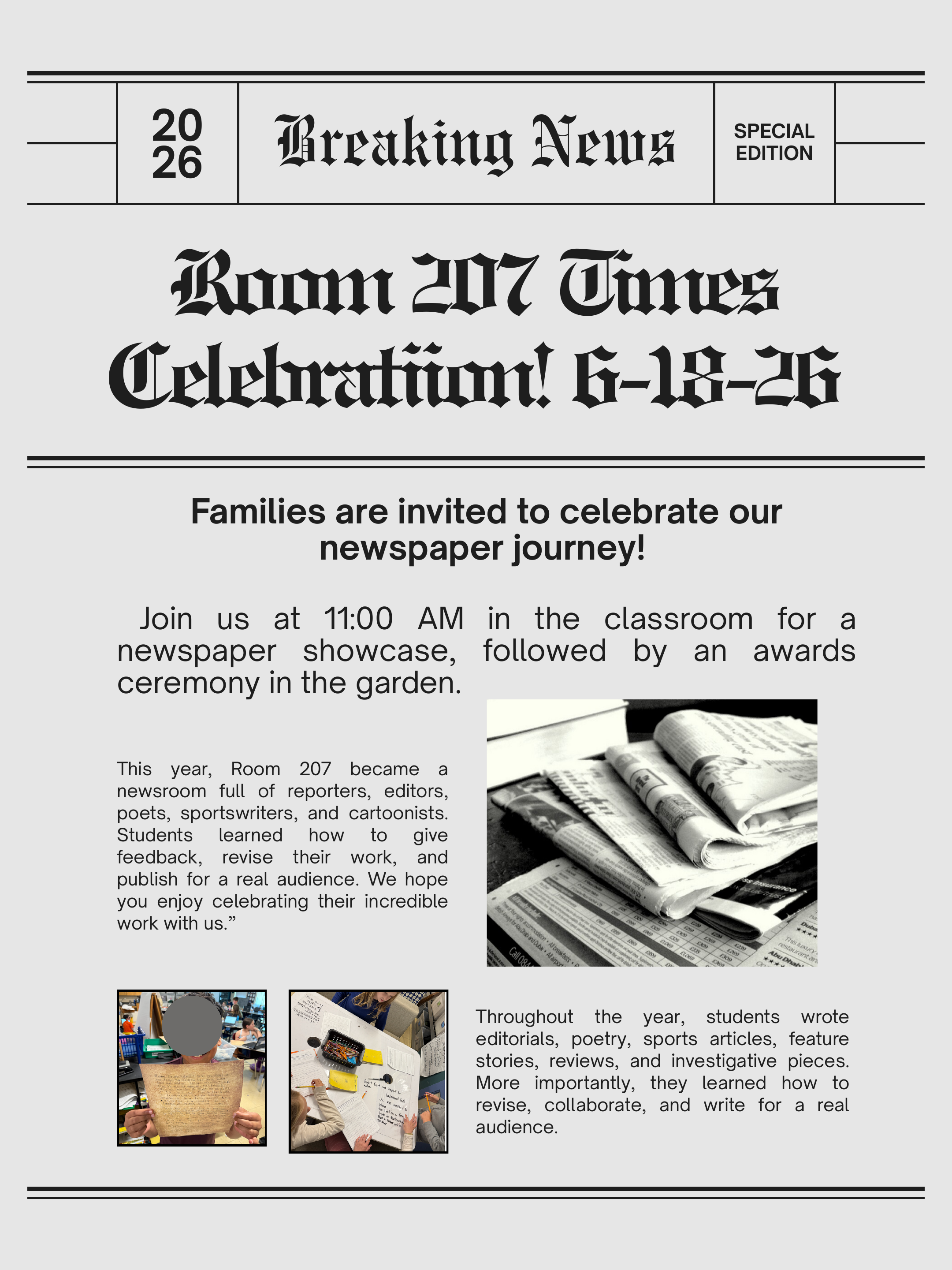
Produced a publication-ready draft by Thursday, published each new issue on Friday, and ultimately welcomed families to celebrate all eleven editions
Teacher reflection
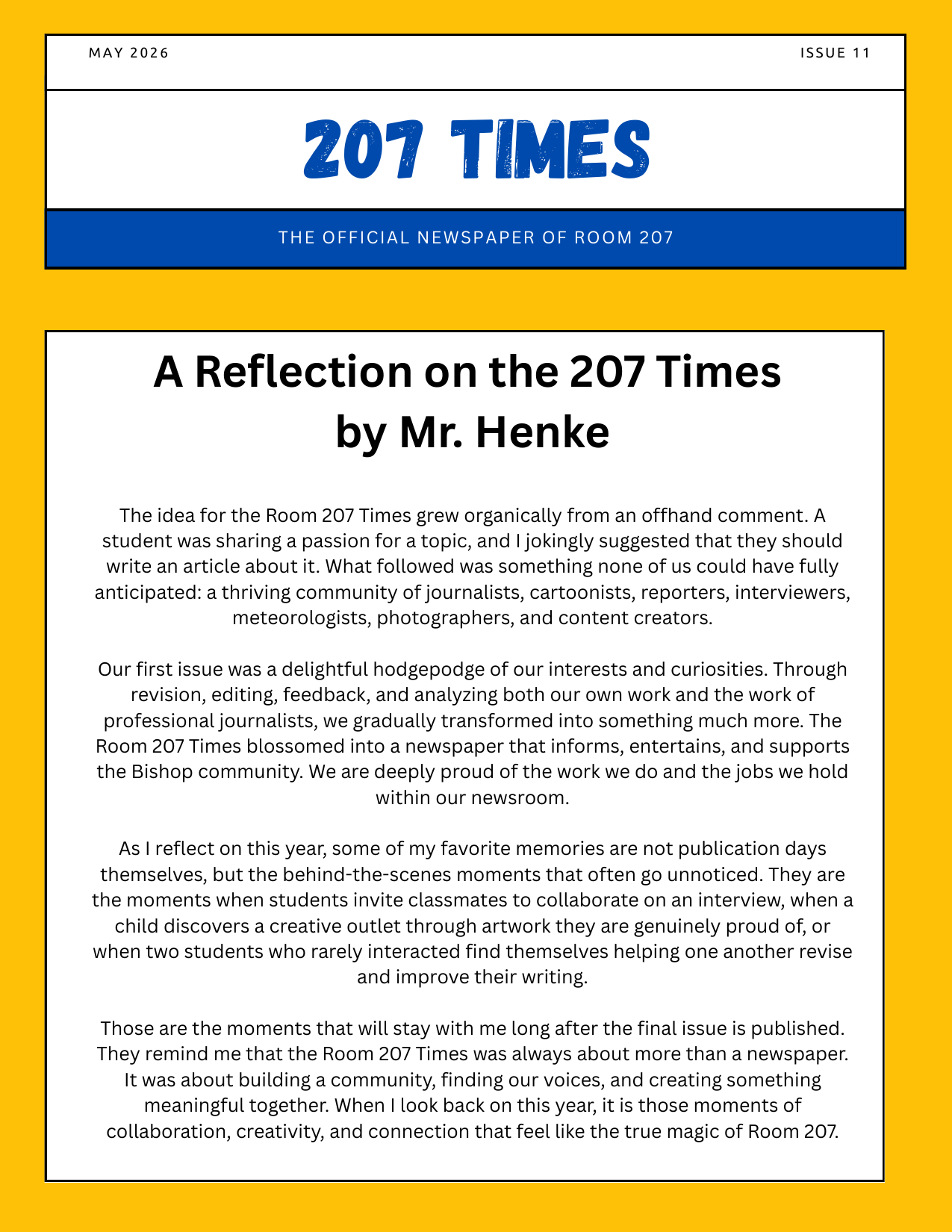
“What began as a small writing invitation blossomed by following authentic student engagement. The newspaper helped me see students more fully: their humor, expertise, curiosity, convictions, and the ways they cared for one another. The final issue included each student’s reflection, favorite work, and a personal note from me—not as an ending to a writing assignment, but as a record of a community we built together.”
Learning made visible through
Continue exploring