Selected learning experience 05
Grade 4 · Historical perspective-taking
What would the Barton family say?
A one-day inquiry that brought 250-year-old characters into a modern family group chat—helping students use textual evidence, historical context, and perspective-taking to anticipate reactions to the American Revolution.
The context
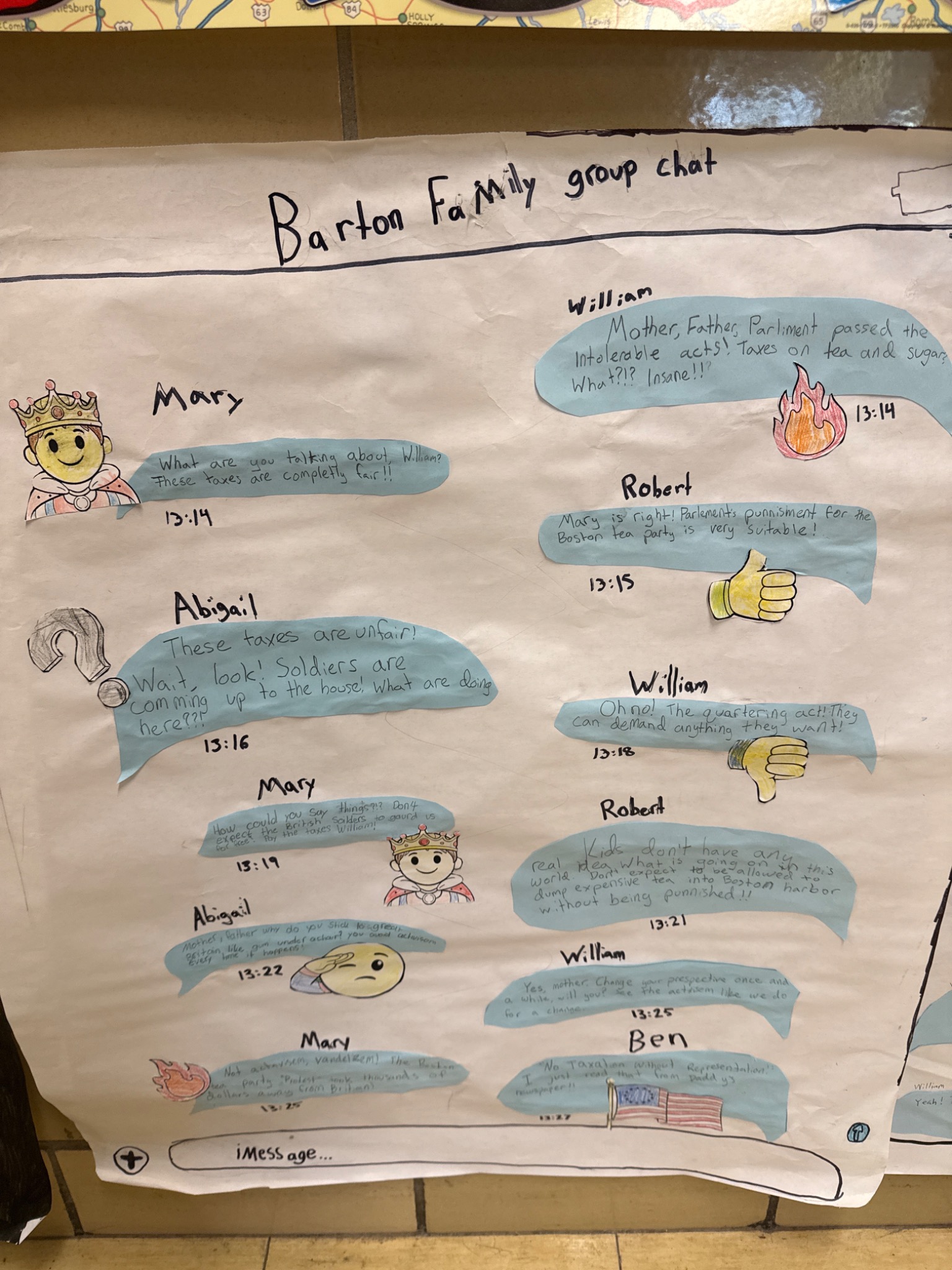
Our EL unit centered on Divided Loyalties and asked students to study characters whose relationships were strained by Patriot and Loyalist sympathies. The reading work mattered, but the unit could feel distant and dry. To make the conflict more immediate, I invited students to time-travel the Barton family into the present day. Each group received a different event leading up to the Revolution—the Stamp Act, Boston Massacre, Boston Tea Party, Intolerable Acts, or another turning point—and built a family group chat showing how the characters might respond. The modern format gave students an engaging reason to return to the text, weigh competing loyalties, and think carefully about what each person feared, valued, and believed.
The learning journey
From curiosity
to meaningful action.
- 01
Tracked the Barton family’s relationships, character traits, and shifting Patriot or Loyalist sympathies while reading Divided Loyalties
- 02
Studied the causes and consequences of a specific event leading up to the American Revolution
- 03
Predicted how each character would feel about the event and identified evidence that could support that interpretation
- 04
Translated those historically grounded perspectives into a modern family group chat, using voice, reactions, and sequence to make the conflict visible
- 05
Compared group chats across events to examine how political pressure can shape motivations, relationships, and decisions over time
Teacher reflection
“The group-chat structure was playful, but the thinking underneath it was rigorous. Students could not simply state whether an event was good or bad; they had to inhabit several perspectives at once and make each response believable. By placing old conflicts inside a familiar communication form, the task gave students a way into character development, historical causation, and the very human consequences of divided loyalties.”
Learning made visible through
Continue exploring