Selected learning experience 02
Grade 4 · Poetry studio & exhibition
Who are we as poets?
A reinvention of a prescribed writing unit that replaced three assigned poems with a sustained poetry studio—grounded in mentor texts, experimentation, revision, visual art, and the conviction that every student was already a poet.
The context
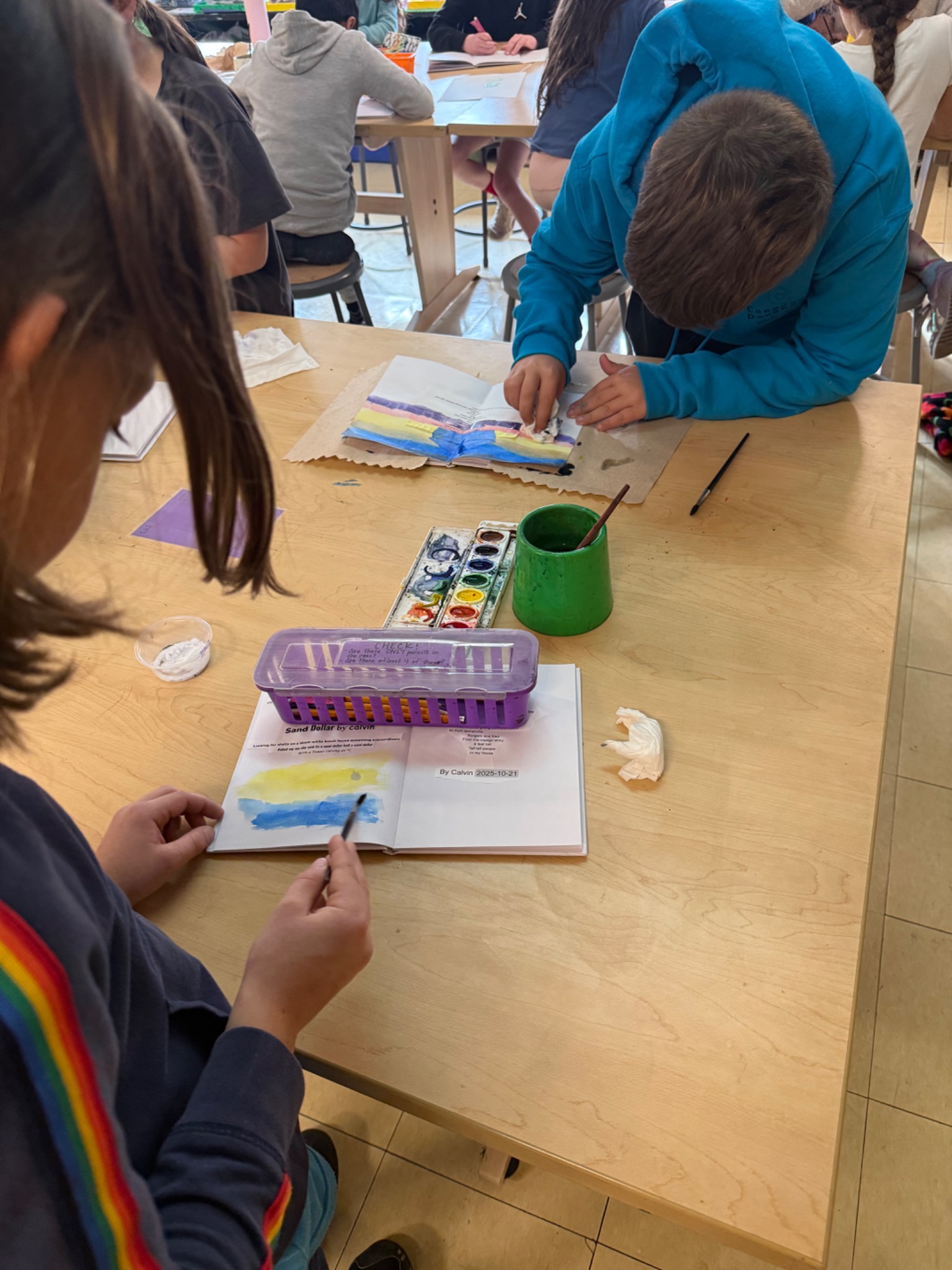
While reading Love That Dog by Sharon Creech, students encountered and analyzed the same poems that shape Jack, the novel’s young protagonist. The curriculum proposed writing three poems across two months. I wanted students to experience poetry as a living practice instead, so I told them plainly: you are poets. Each child received a blank hardcover book that became a growing record of imitation, experimentation, sustained revision, illustration, and emerging voice.
The learning journey
From curiosity
to meaningful action.
- 01
Read Love That Dog alongside the poems Jack encounters, examining how mentor texts influence a developing writer
- 02
Investigated each poet’s life, influences, literary techniques, and deliberate craft choices
- 03
Wrote frequently in the style of mentor poems—borrowing structures such as William Carlos Williams’s ‘So much depends upon…’ to discover new possibilities
- 04
Returned repeatedly to one project poem, preserving every iteration so growth remained visible across the anthology
- 05
Partnered with the art teacher to create watercolor interpretations, then curated books and reflections for a family exhibition
Assessment for learning
Criteria made visible.
Feedback made actionable.
Each poetry invitation included a mentor model and a two-column checklist: required elements on the left and optional possibilities on the right. I retained the checklists across the inquiry, allowing me to track how independently and intentionally students applied increasingly sophisticated craft knowledge over time.
From draft to publication
- 01Study a mentor model
- 02Plan with required and optional criteria
- 03Draft before publication
- 04Receive peer feedback
- 05Conference and co-create a revision plan when needed
- 06Revise for final teacher review and publication
Knowledge tracked over time
Teacher reflection
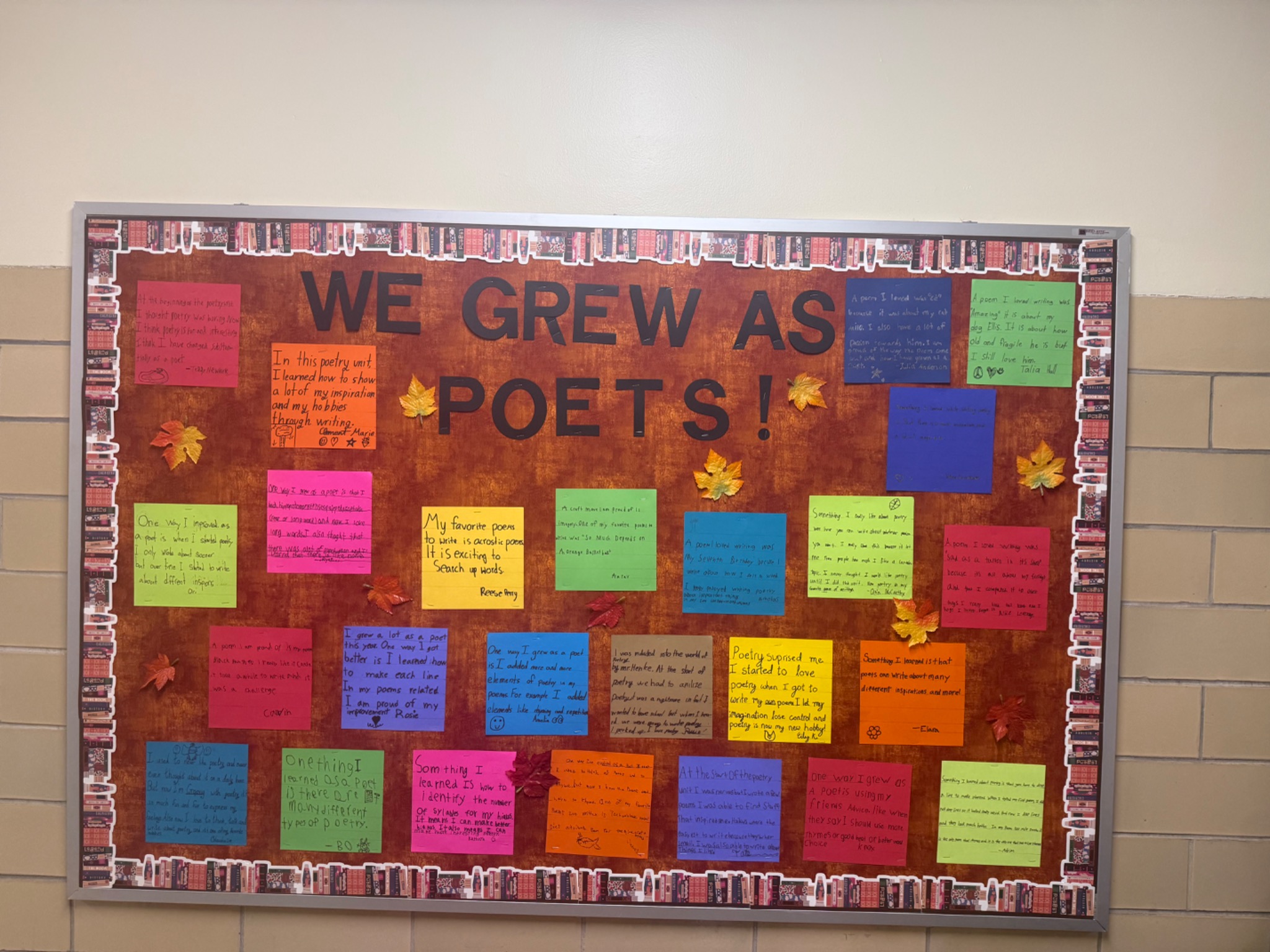
“The most important decision was refusing to treat poetry as three products to complete. By naming students as poets from the beginning, we made room for volume, play, imitation, risk, and genuine revision. Their hardcover books did not hide imperfect early attempts; they honored them as evidence. At the exhibition, the ‘We Grew as Poets’ reflections made the learning visible in the students’ own words—and twenty-four of twenty-five families came to celebrate it.”
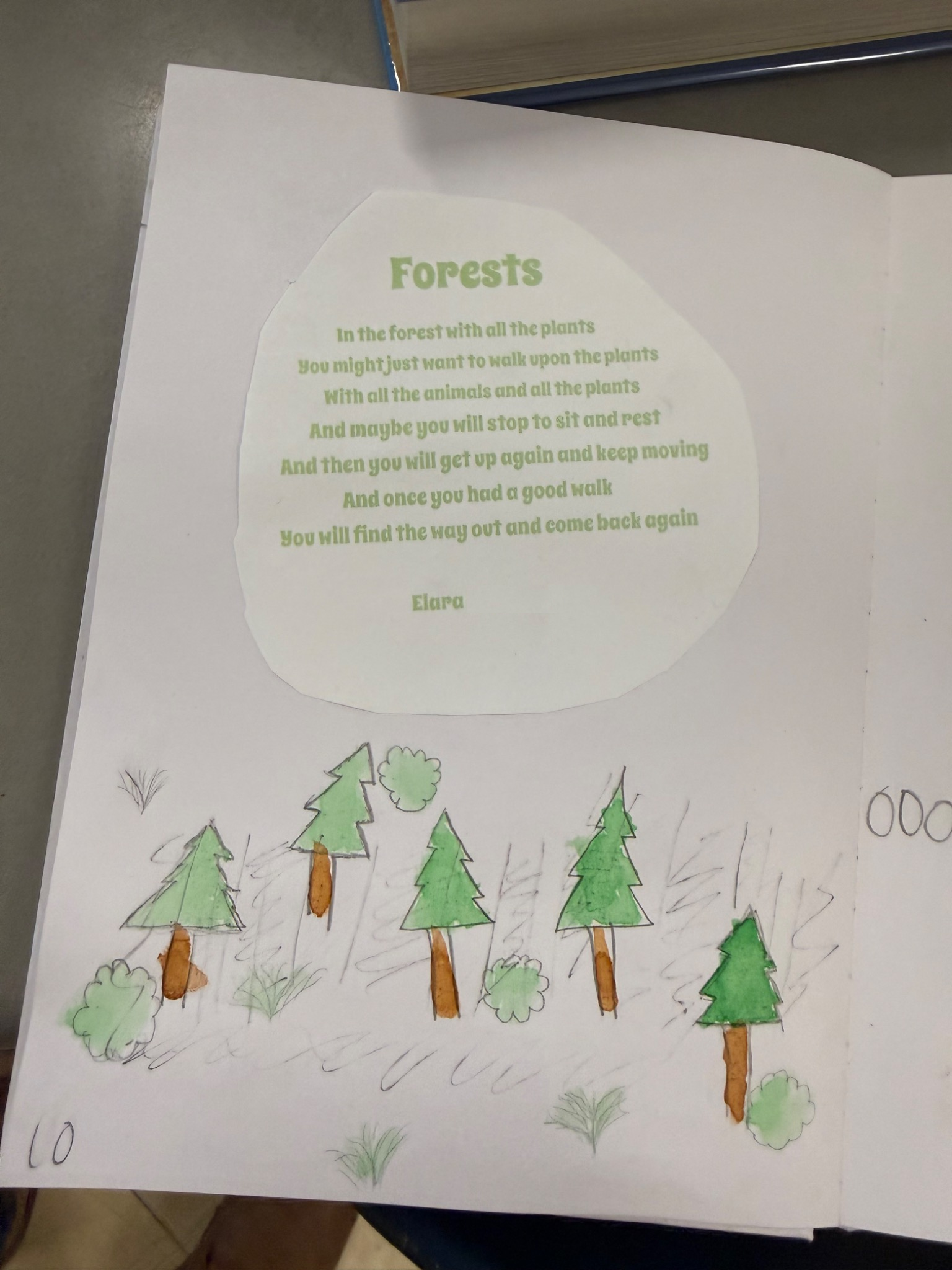
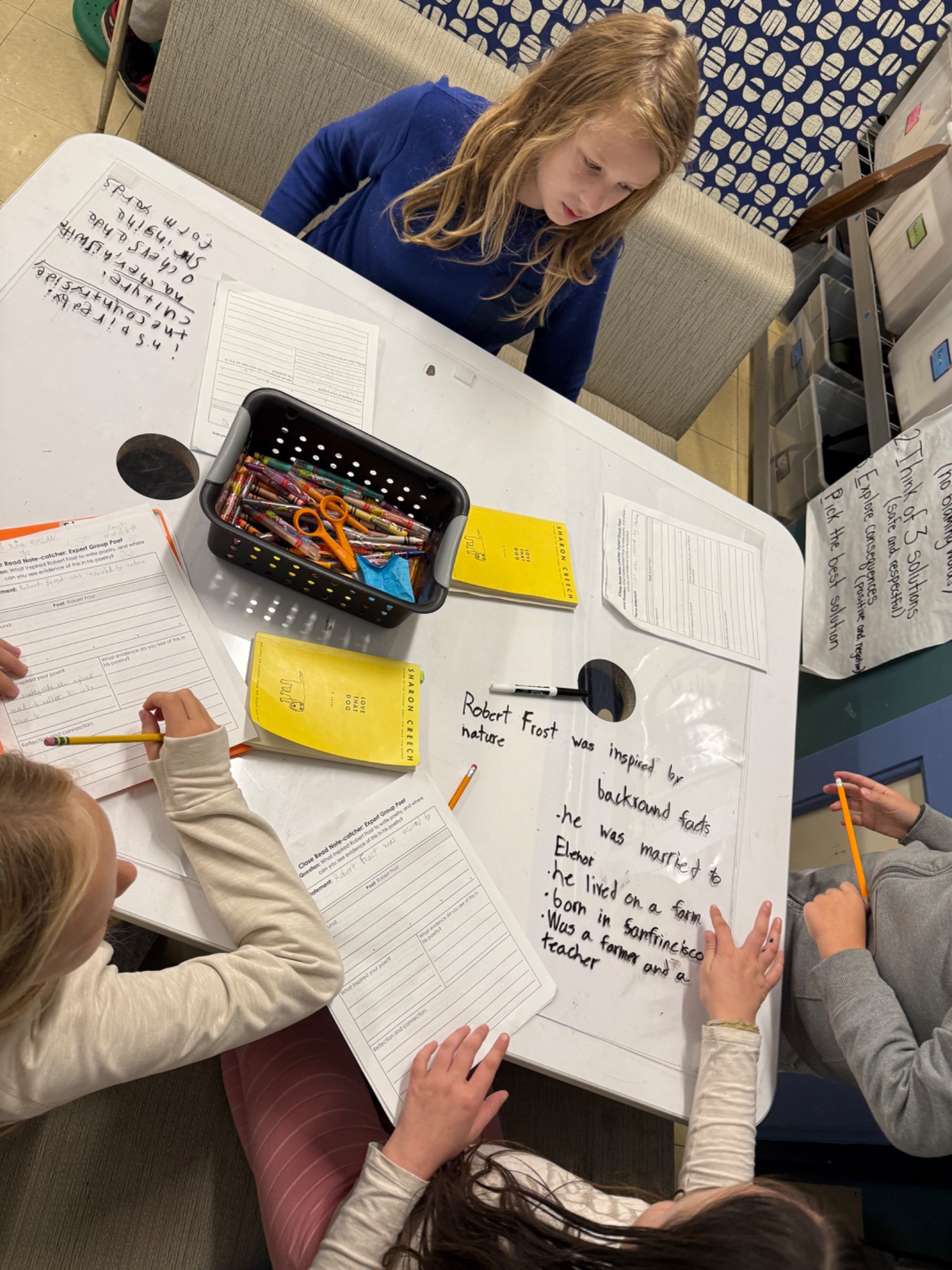
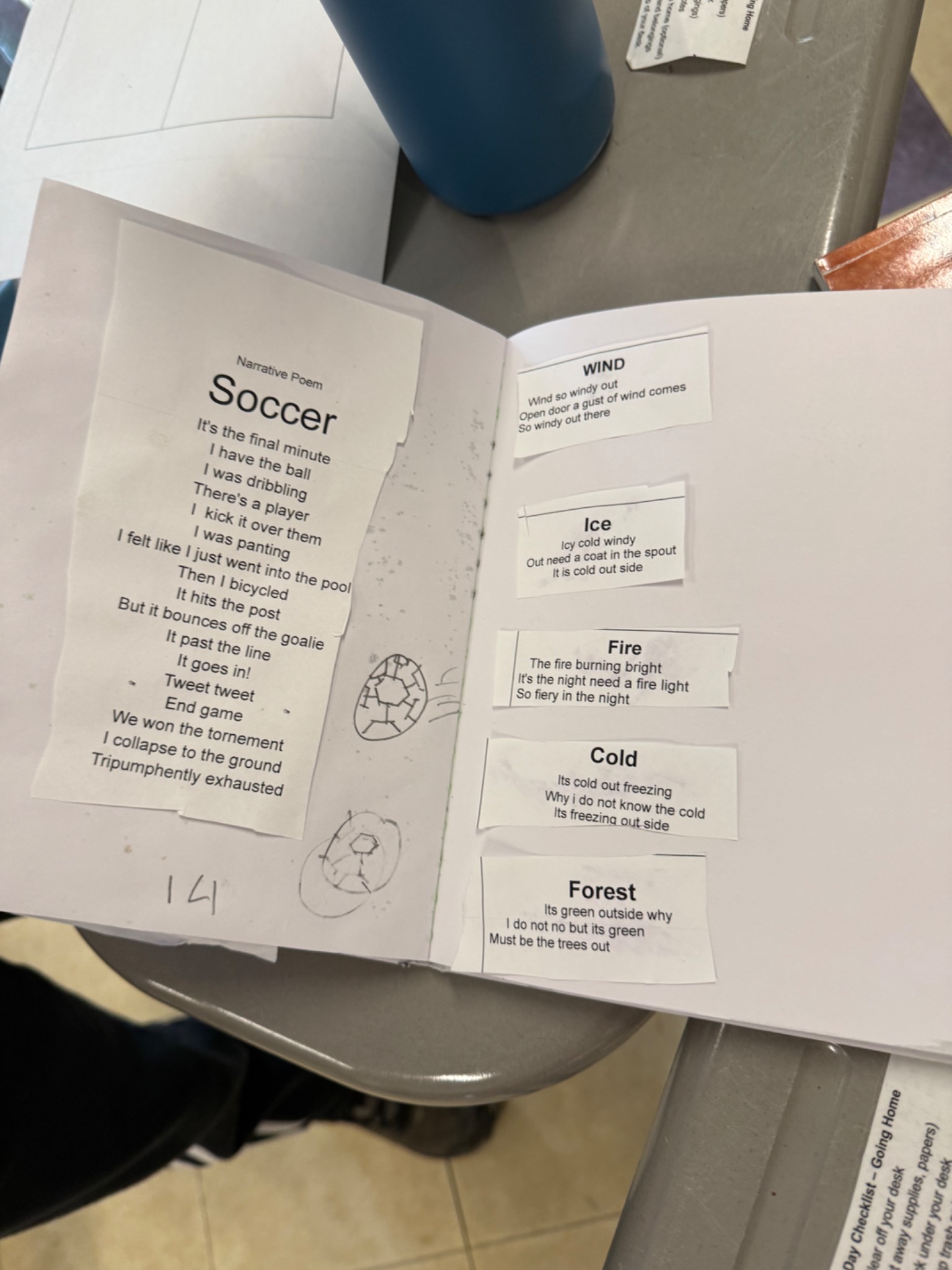
Learning made visible through
Continue exploring