Selected learning experience 01
Grade 5 · Inclusive, transdisciplinary inquiry
What is the power of food?
A co-designed, co-taught inquiry connecting culture, identity, biology, economics, literacy, and mathematics—culminating in a student-designed food-truck exhibition and meaningful community action.
The context
My special education co-teacher, Betsy Johnston, and I designed this inquiry for a class that included five students in a substantially separate program. Until Grade 5, those learners had received most of their programming outside the general education classroom. We wanted to create an ambitious shared experience in which every student held a meaningful role, learned alongside peers, and contributed to work the whole community would see. The unit began with a deceptively simple question: what power does food hold in our lives? Students brought their own histories and family traditions into the inquiry, then investigated food as a biological need, a cultural expression, an economic system, and a way communities connect.
Differentiation in practice
Shared responsibility.
Responsive access.
Betsy and I created strategic reading groups so that every student remained responsible for essential content while receiving the access support they needed. Each group studied an article about a national dish at a comparable reading level; some students heard the text read aloud, others received front-loaded vocabulary, and others pursued an extension connecting the national dish of Laos to Laotian food in Lowell, Massachusetts. That extension invited students to examine how a diaspora community can preserve a dish while contemporary life and U.S. influences reshape particular recipes—and what those changes reveal about culture and identity.
The learning journey
From curiosity
to meaningful action.
- 01
Interviewed Dr. Fuji Lozada, a Davidson College professor of anthropology and food-studies expert, about how food intersects with culture and identity
- 02
Interviewed family members about meaningful foods, recipes, and traditions
- 03
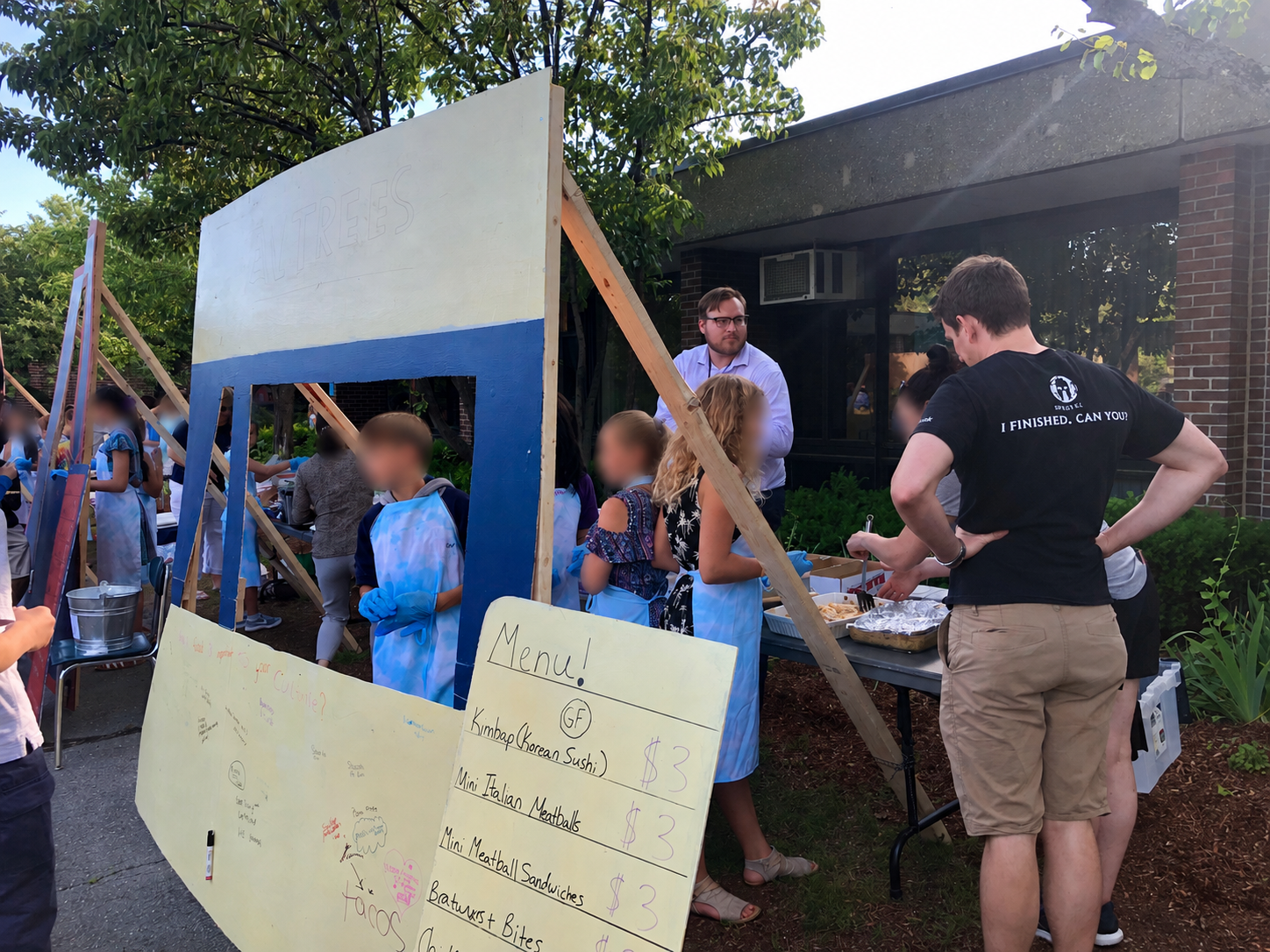
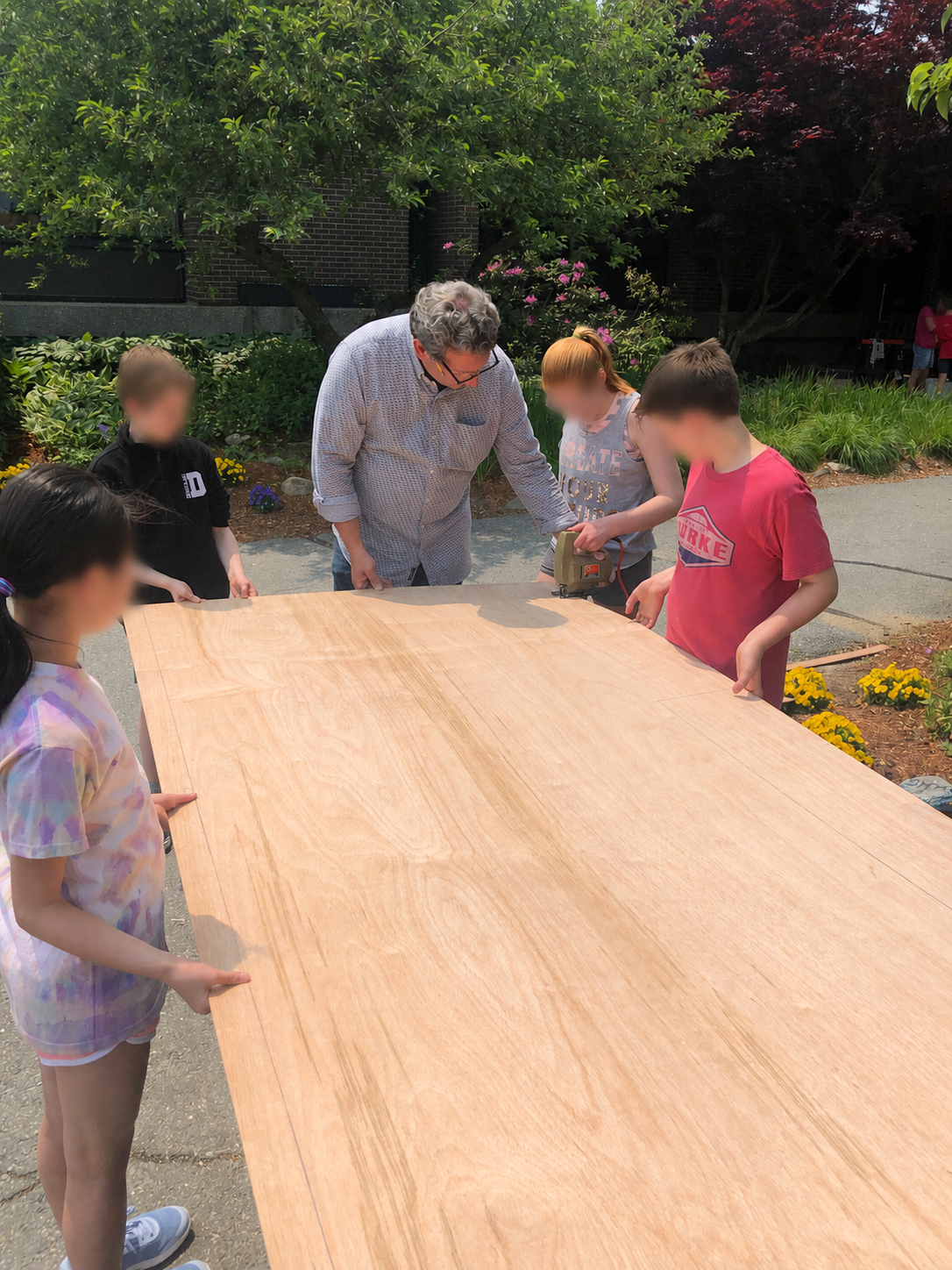
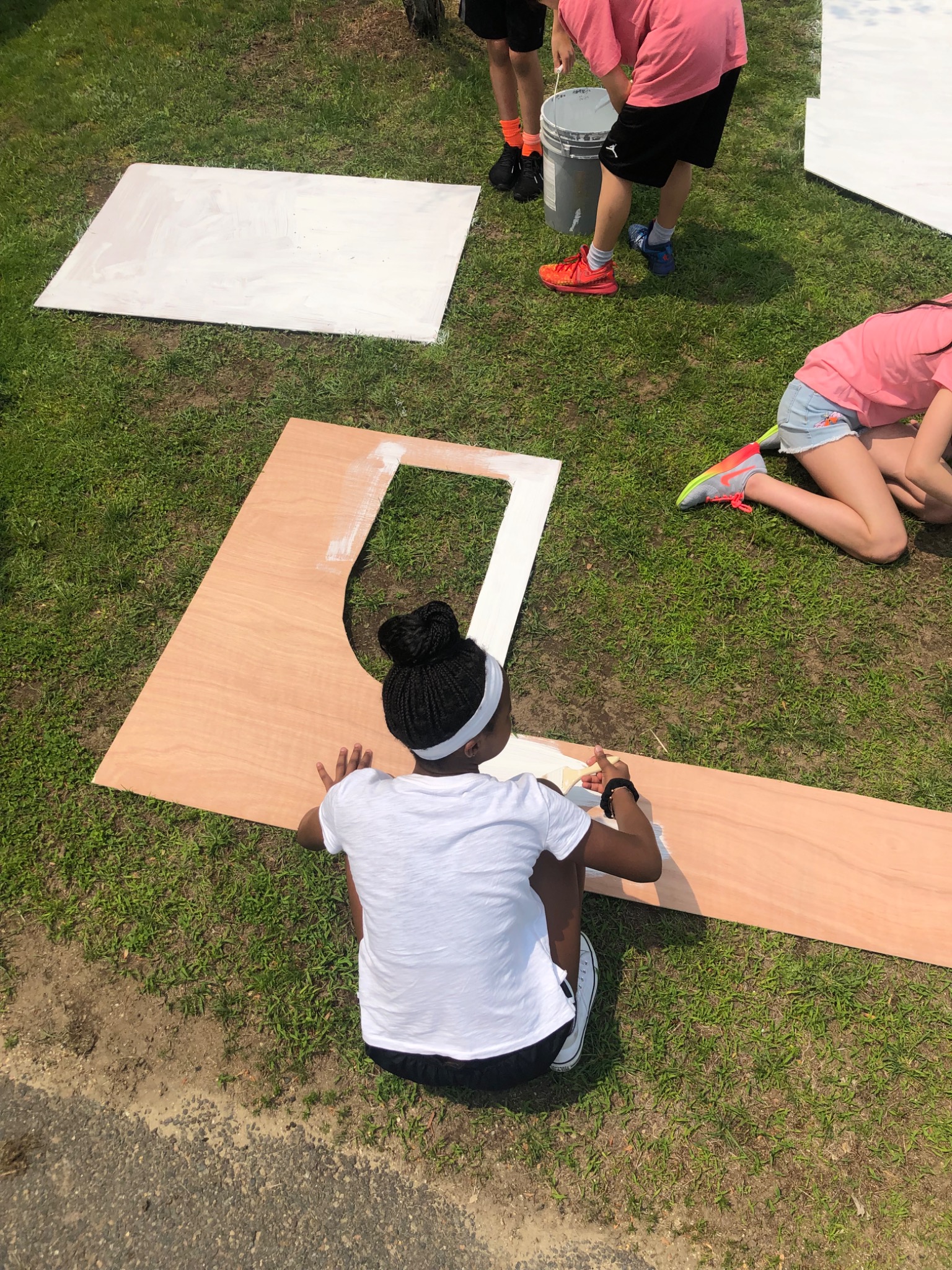
Collaborated with a local carpenter to measure, cut, and construct full-size food-truck façades
- 04
Applied mathematical reasoning to menus, pricing, budgeting, and decision-making
- 05
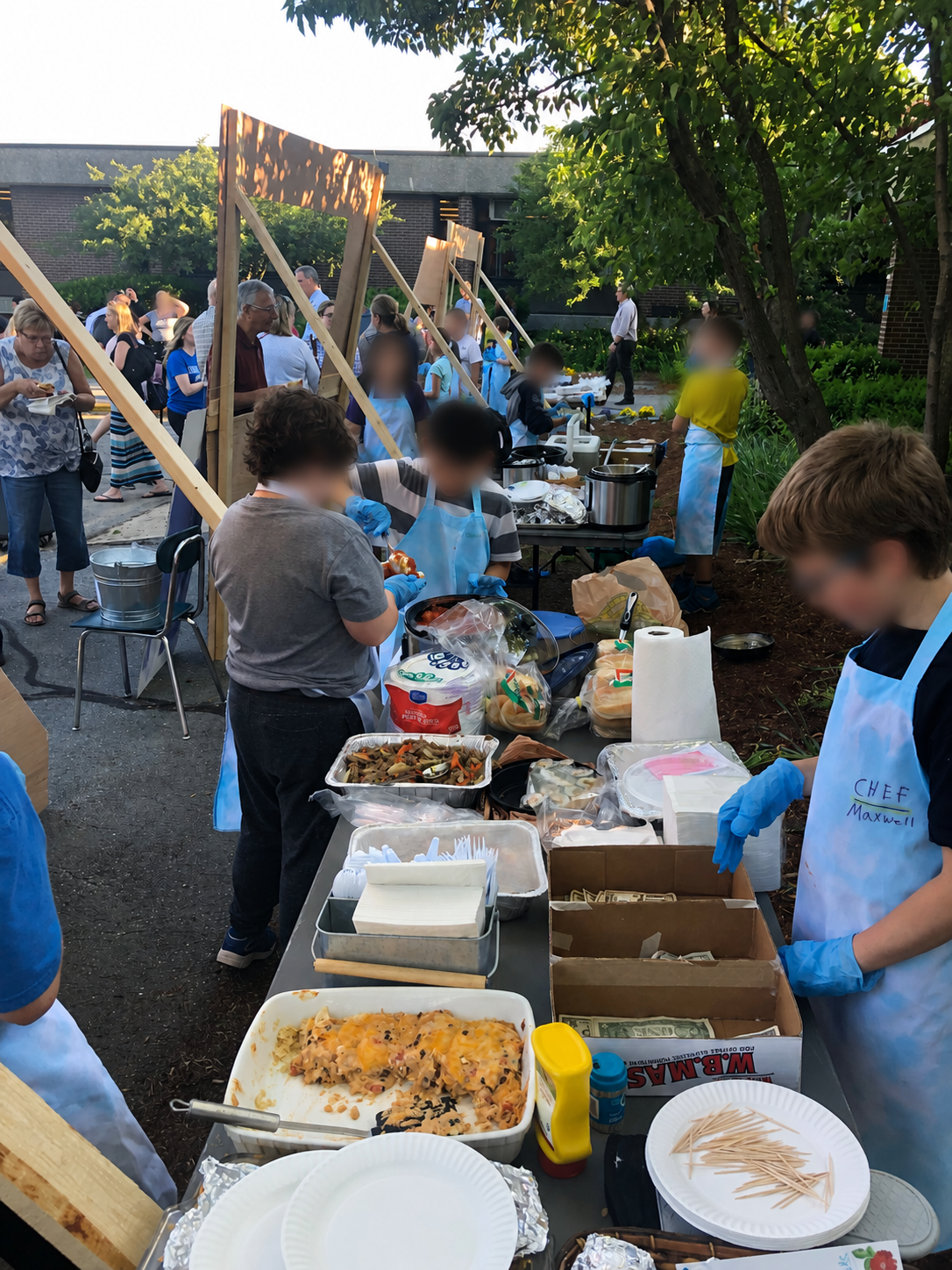
Prepared and sold family-donated foods at a community exhibition
- 06
Published a collaborative class recipe book and donated the money raised to a local animal shelter
Teacher reflection
“This inquiry was inclusion by design, not proximity alone. Betsy and I planned, taught, and adapted the experience together so that students who had historically learned apart could participate as full members of the classroom community without lowering the intellectual or creative ambition of the work. Students were not completing disconnected assignments; they were building toward something that mattered to them and to an audience beyond our classroom. The exhibition gave every learner a genuine reason to collaborate, communicate, take risks, and feel proud of what we had pulled off together.”
Learning made visible through
Continue exploring